
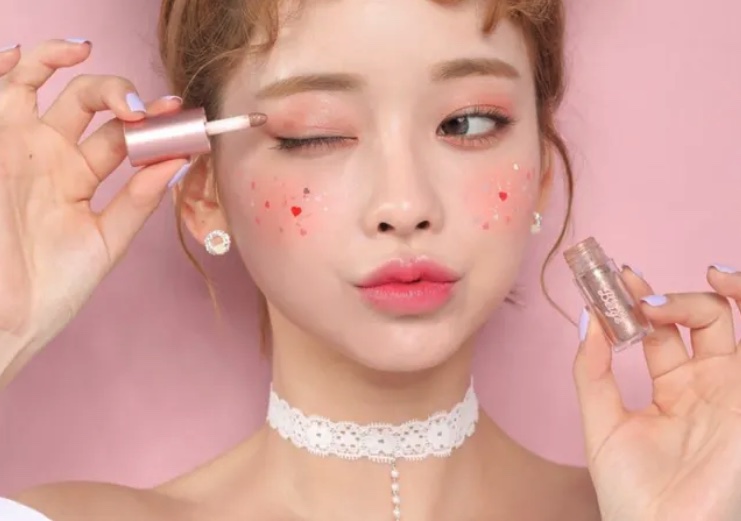
A fresh report from The Business of Fashion says the U.S. has become South Korea’s biggest overseas buyer of skincare and cosmetics, overtaking China, a symbolic and practical turning point for brands that built their international playbooks around the Chinese market for more than a decade. In the U.S., the rules are different: discovery happens in Sephora aisles and on Amazon search pages, claims are scrutinized by ingredient-literate consumers, and “dermatology adjacent” messaging often matters as much as aesthetic packaging. For Korean brands, that means shifting from trend-chasing to trust-building — and from short bursts of attention to durable distribution.
That shift is already visible in how major Korean players are sequencing their launches. Women’s Wear Daily reports that Amorepacific-owned Iope, long positioned in Korea and parts of Asia as a premium anti-aging brand, is debuting in the U.S. via Sephora before expanding to Amazon. The rollout includes a tight assortment across familiar clinical pillars — retinol, vitamin C — alongside newer categories being marketed as advanced repair and regeneration. The channel choice is the message: Sephora is still the clearest signal that a brand has “graduated” from niche curiosity into curated mainstream, while Amazon represents the scale lever. In combination, they form the modern American on-ramp: credibility first, then volume.
The opportunity is large, but so is the competitive pressure. “K-beauty” is no longer a single shelf tag; it is a crowded arena filled with Korean heritage brands, fast-moving indie labels, and U.S. companies that have learned to speak K-beauty’s language. In that environment, the winners tend to be brands that can translate Korea’s innovation tempo into American compliance, education, and repeat purchase. Retail buyers want clear hero products, simple regimens, and claims that can survive ingredient skepticism. Consumers want visible results without irritation, plus routines that fit into busy lives.
Enter the second growth vector: devices. In Korea, beauty technology has long been part of the culture — from clinics to home-grade tools — but now it is becoming an export thesis. KED Global reports that South Korean home skincare device exports are rebounding, buoyed by global appetite for anti-aging and clinic-adjacent routines at home. This is not a sideshow. Devices raise average order values, extend customer lifecycles, and create ecosystem behavior: once a shopper buys an LED mask, RF tool, or booster device, they are more likely to keep buying compatible gels, ampoules, and aftercare products — turning skincare into a “system” rather than a one-off purchase.
The U.S. market is particularly receptive right now because at-home beauty has been normalized by a decade of wellness tech and accelerated by social media. A beauty device is camera-friendly; it looks like innovation. It also allows brands to differentiate beyond scent and texture — the usual battlegrounds in a saturated category. The trade-off is higher consumer expectations and greater regulatory and safety scrutiny. Brands that succeed will need transparent specs, strong instruction, and a conservative approach to medical-adjacent claims. In the American context, the line between beauty gadget and medical device is a legal minefield.
Still, the momentum is real — and it is being reinforced by the trend cycle feeding the top of the funnel. Trade coverage this week highlights how ingredients like tranexamic acid and retinal are showing up prominently in K-beauty trend discussions, reflecting a broader move toward “results” actives rather than novelty for novelty’s sake. Consumer media is echoing the same theme: the 2026 conversation is increasingly about proven ingredients, smarter delivery systems, and longevity-focused routines. When K-beauty aligns with that direction, it stops being a quirky import and starts functioning as a premium problem-solver.
There is also a narrative layer that matters for brands building in the U.S.: K-beauty’s most viral ingredients are now being framed as “science.” The Business of Fashion points to headline-grabbing categories — including snail mucin and salmon-sperm-derived PDRN — as part of the U.S. push, but what makes them sell is not shock value. It is the way these ingredients are packaged into claims about barrier health, post-procedure recovery, and visible tone improvement — themes that American shoppers have already been trained to care about.
For KWAVE, the takeaway is clear: the center of gravity is shifting from “K-beauty as trend” to “K-beauty as infrastructure.” The brands and products with the best 2026 odds are the ones that can do three things at once: win a trusted retail gatekeeper (Sephora or equivalent), scale through searchable marketplaces (Amazon and beyond), and extend lifetime value through systems (devices plus consumables). As that happens, the U.S. becomes less of an export destination and more of a proving ground — where Korean innovation must translate into American repeatability.
In practical terms, expect the next wave of U.S.-facing K-beauty launches to look more clinical, more regimented, and more tech-supported. Labels will emphasize tested actives and repair narratives. Packaging will get clearer, not cuter. Tutorials will become as important as influencer posts. And devices — once a category reserved for enthusiasts — will continue moving toward the center of the aisle, positioned as the new “step” that turns skincare from a shelf purchase into a habit.
K-beauty built its global reputation by moving fast. Its American era will be defined by moving credibly — and by proving that speed can coexist with science, safety, and scale. If 2025 was about discovery, 2026 will be about retention — and brands that engineer routines will own this market.