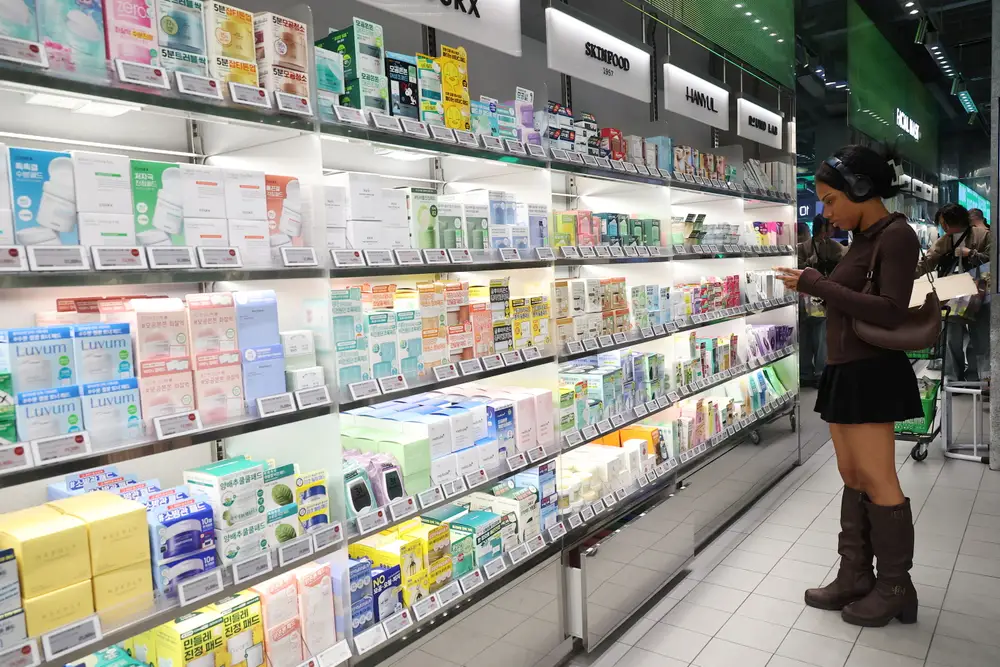
The “K-Beauty” label has officially transcended its status as a fleeting trend to become a structural pillar of the U.S. beauty industry. In 2026, the American market is no longer just importing products; it is adopting an entire philosophy of skin health. From clinical derma-cosmetics to “clean-tech” formulations, South Korean brands are executing a pincer movement, capturing both the luxury aisles of Sephora and the mass-market shelves of Ulta Beauty.
A Dominance Driven by Data and “Skin-Literacy”
The current surge is fueled by a more sophisticated American consumer. “Skin-literacy”—the understanding of active ingredients like Centella Asiatica (Cica), Niacinamide, and Rice Ferments—has reached an all-time high, largely driven by the transparency and educational marketing of Korean brands.
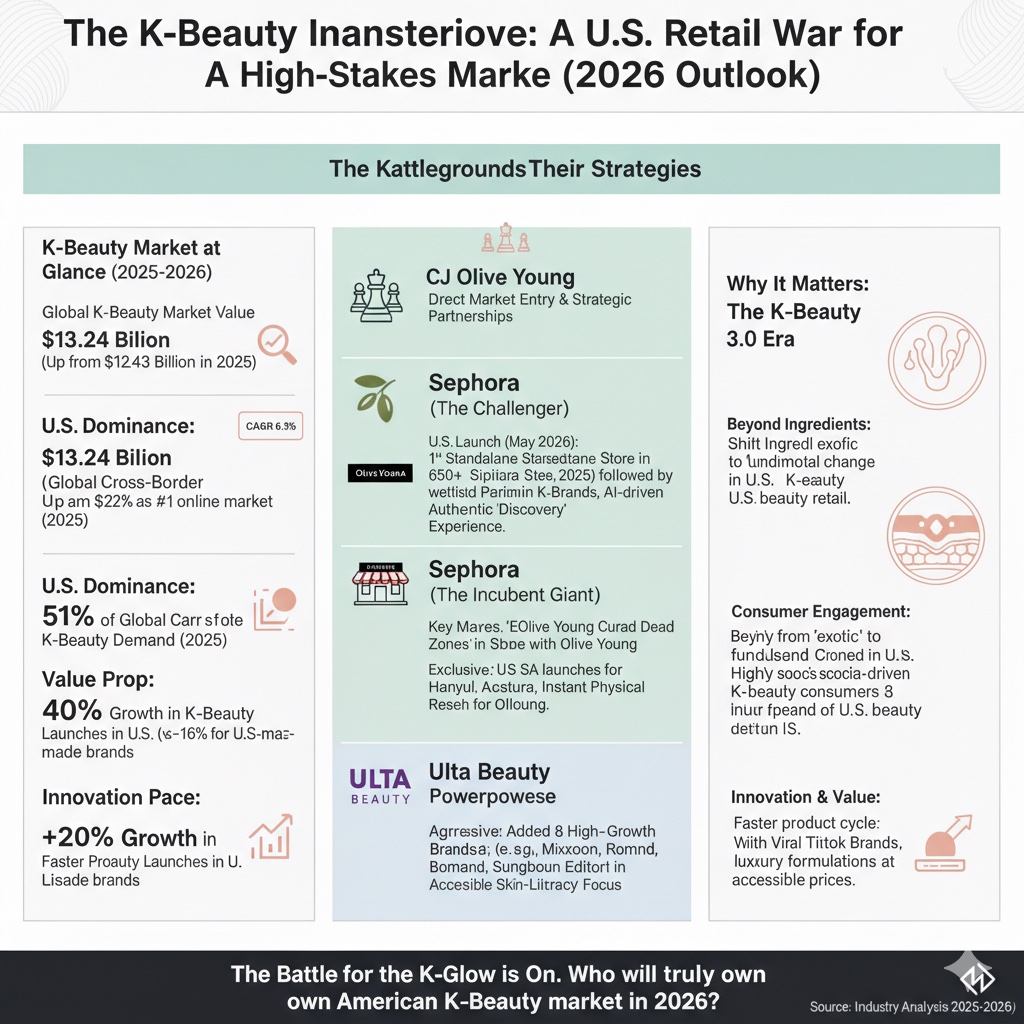
- Market Pivot: As of early 2026, South Korea has solidified its position as the #1 cosmetics exporter to the U.S., surpassing traditional powerhouses like France.
- The Growth Gap: While domestic U.S. beauty brand launches saw a slight contraction last year, K-Beauty launches in the U.S. grew by 20%, fueled by rapid R&D cycles that outpace Western competitors by nearly double.
| Key Market Insight (2025-2026) | Data Point |
| Global K-Beauty Market Value (2026 est.) | $13.24 Billion |
| U.S. Share of Global Online K-Beauty Demand | 51% |
| Growth of K-Beauty Launches in the U.S. | +20% (vs. -16% for U.S.-made brands) |
The Multi-Front Offensive: Clinical, Heritage, and Indie
The “turf war” is being fought across three distinct segments of the Korean beauty arsenal:
- The Clinical Powerhouses: Brands like Aestura and Torriden have moved into Sephora to fill the high-demand gap for “medical-grade” skincare that doesn’t sacrifice elegance. Their focus on barrier repair has resonated with a post-pandemic audience obsessed with skin health over heavy makeup.
- Modern Heritage: Hanyul and Sulwhasoo continue to dominate the luxury tier, blending traditional Korean medicinal herbs (Hanbang) with modern bio-fermentation technology, appealing to an older, high-spending demographic.
- The Viral “Indie” Wave: Brands like Mixsoon and Beauty of Joseon have leveraged TikTok-driven viral success into permanent residency at Ulta Beauty. Their ability to offer premium, single-ingredient-focused products at “masstige” prices has won over Gen Z.
Strategic Infrastructure: The Retail Gateway
The competitive landscape among retailers has intensified as they vie to be the “exclusive home” of these high-performance brands.
- Sephora is doubling down on exclusivity, positioning itself as the curator of “Advanced K-Beauty.”
- Ulta Beauty is utilizing its vast suburban footprint to make K-Beauty accessible to the American heartland.
- Direct-to-Consumer (DTC) & Logistics: Large-scale Korean distributors are shortening supply chains, ensuring that a product that goes viral in Seoul today is available in New York within the same month.
The Bottom Line: K-Beauty 3.0
We are now in the era of K-Beauty 3.0. It is no longer about the novelty of “snail mucin” or “sheet masks.” It is about technological superiority and speed-to-market. As Korean brands continue to out-innovate and out-educate their global rivals, the “turf war” in the U.S. isn’t just about who sells the most—it’s about who defines the future of the American face.